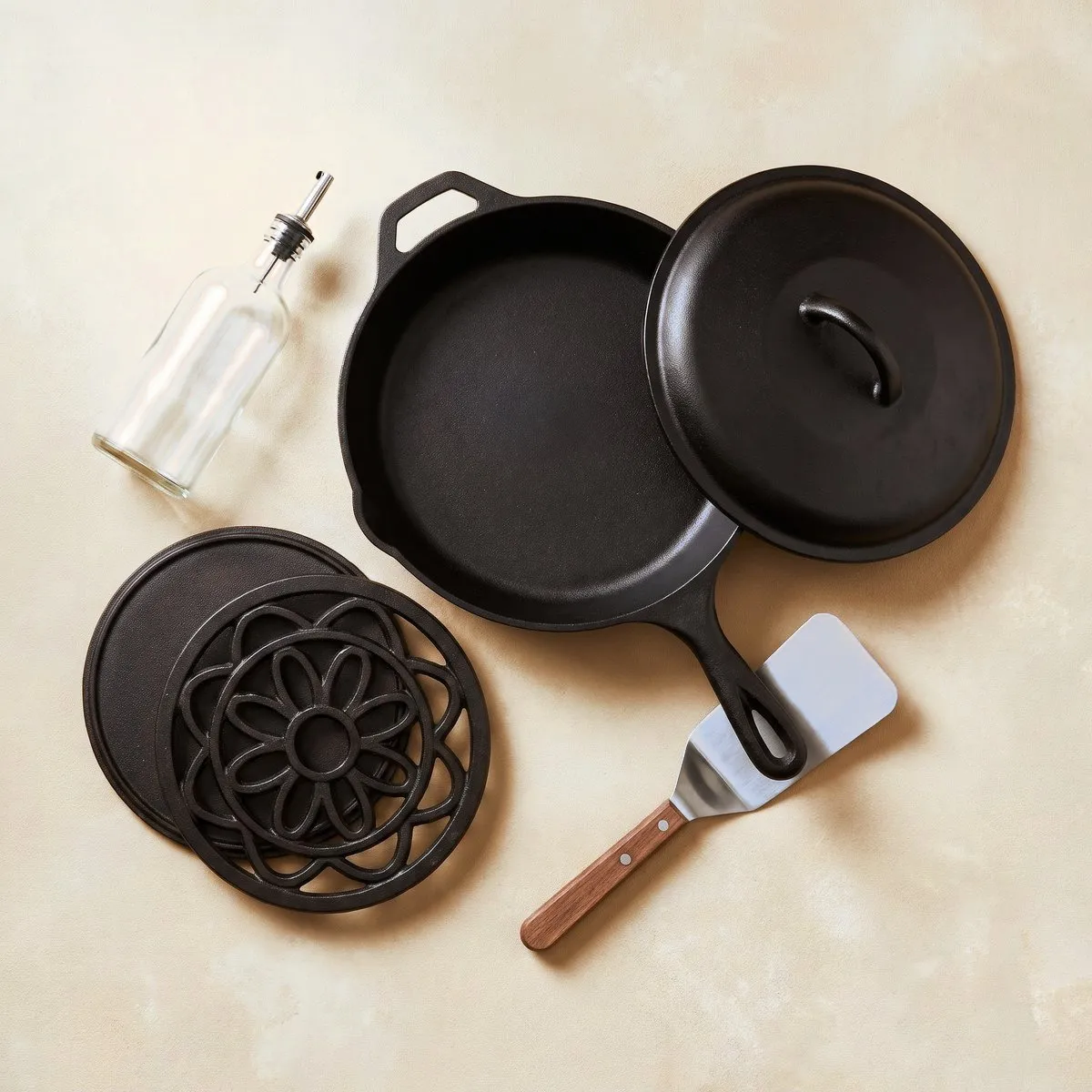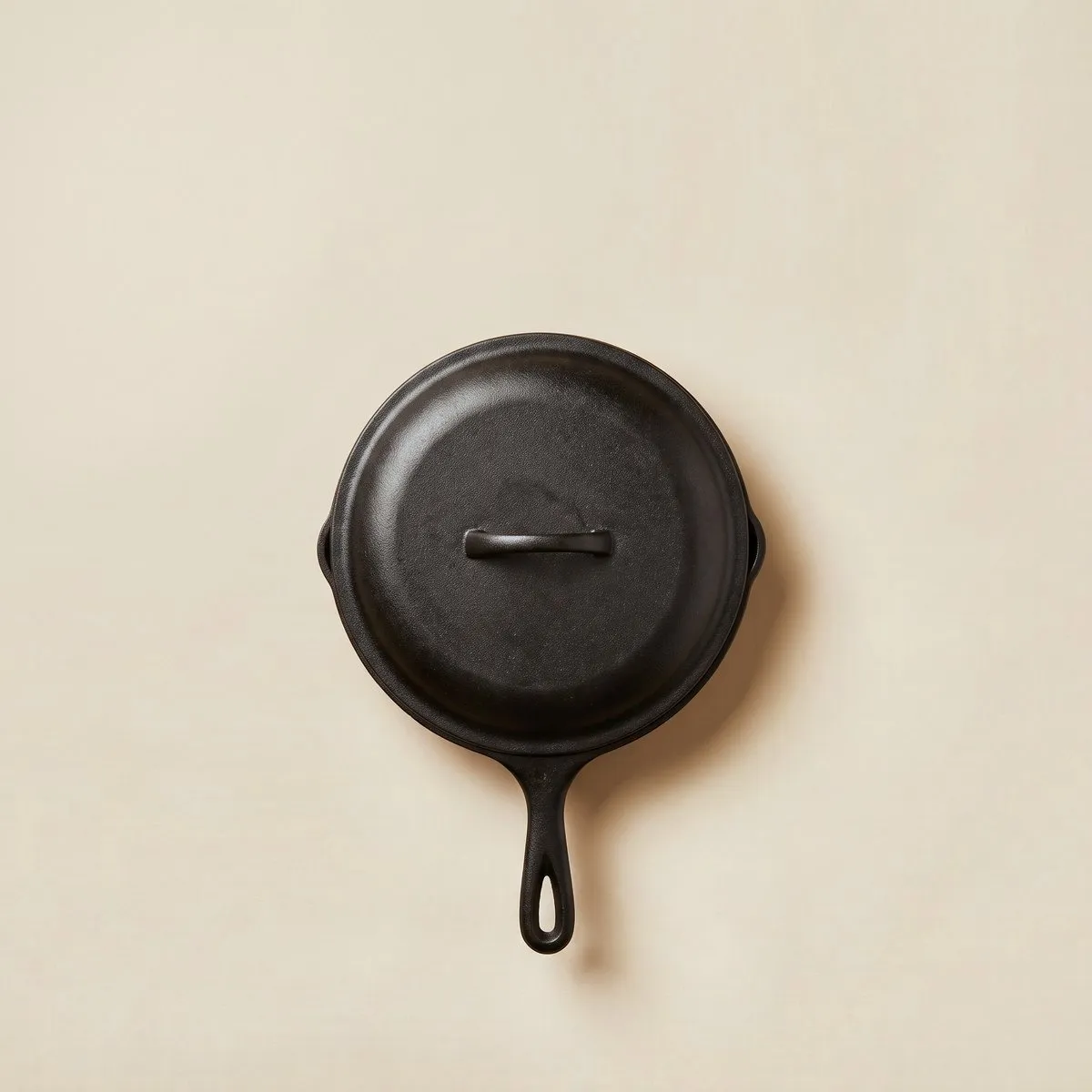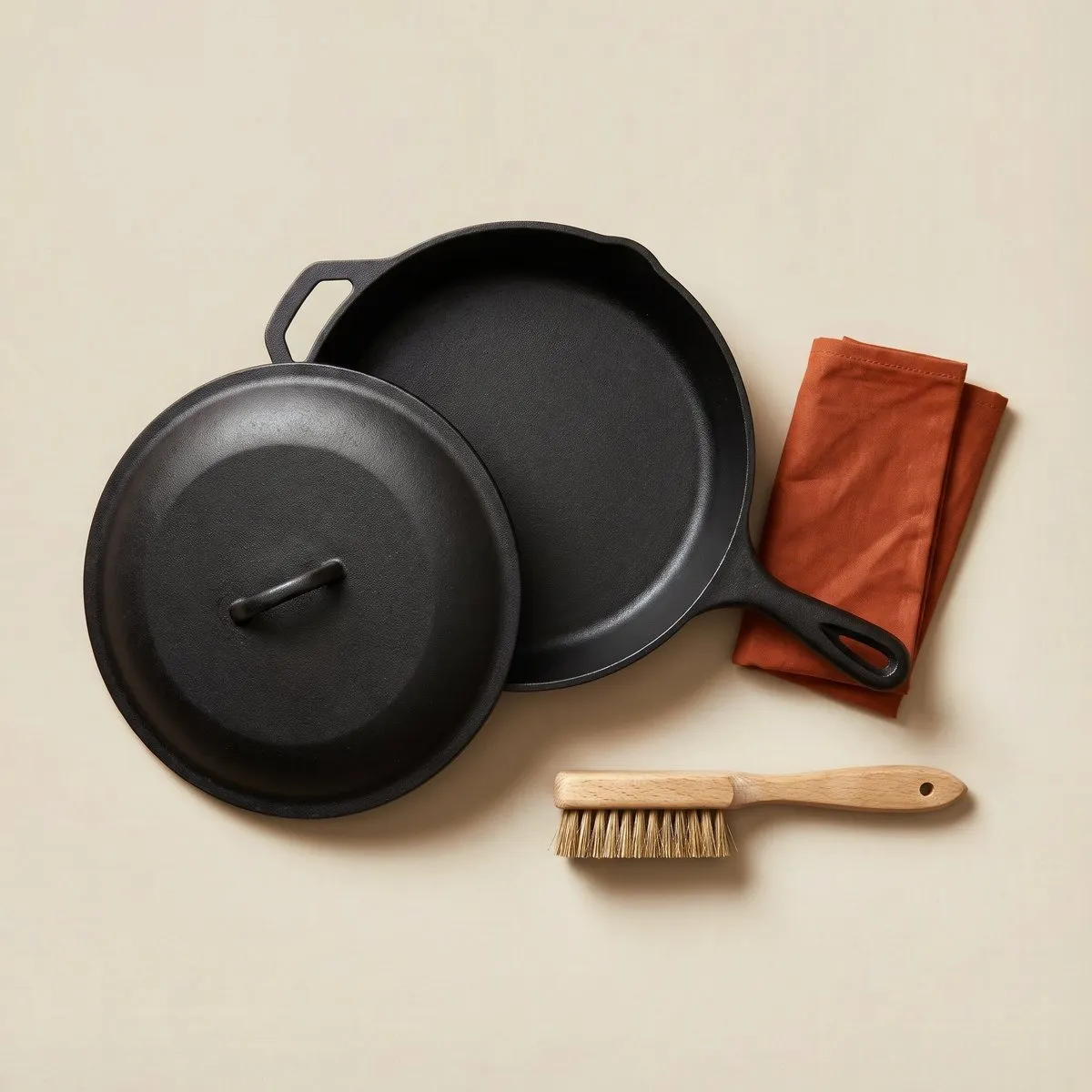
The first week with a cast-iron pan is mostly about getting used to its weight and learning how it holds heat. A 26 cm Halden pan weighs 2.4 kg, and a 30 cm pan weighs 3.2 kg. That heft is the point: it sears steadily and does not cool when food goes in. It also means you should lift it with two hands when it is full, and never swing it around a hot hob.
Day one: wash, dry, cook
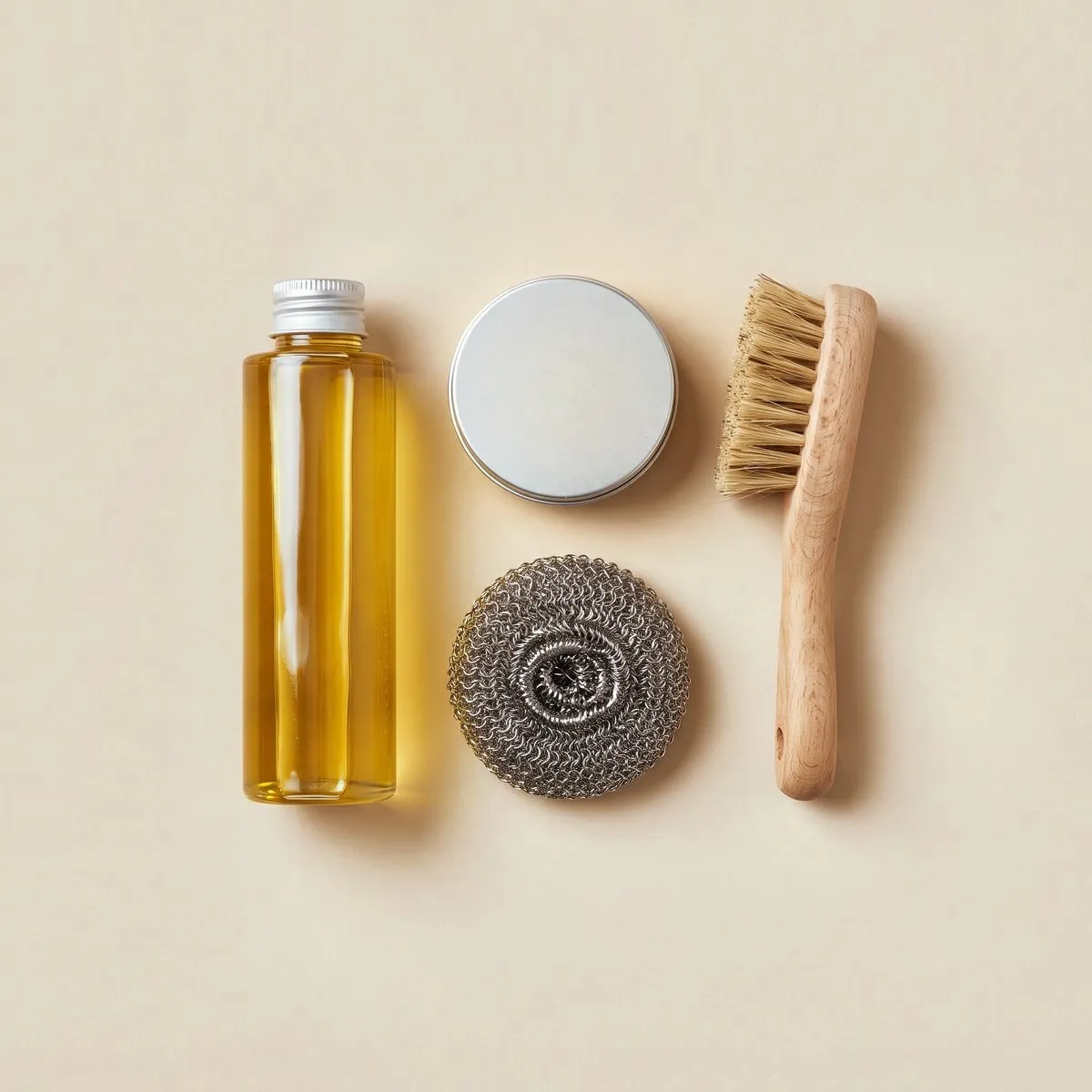
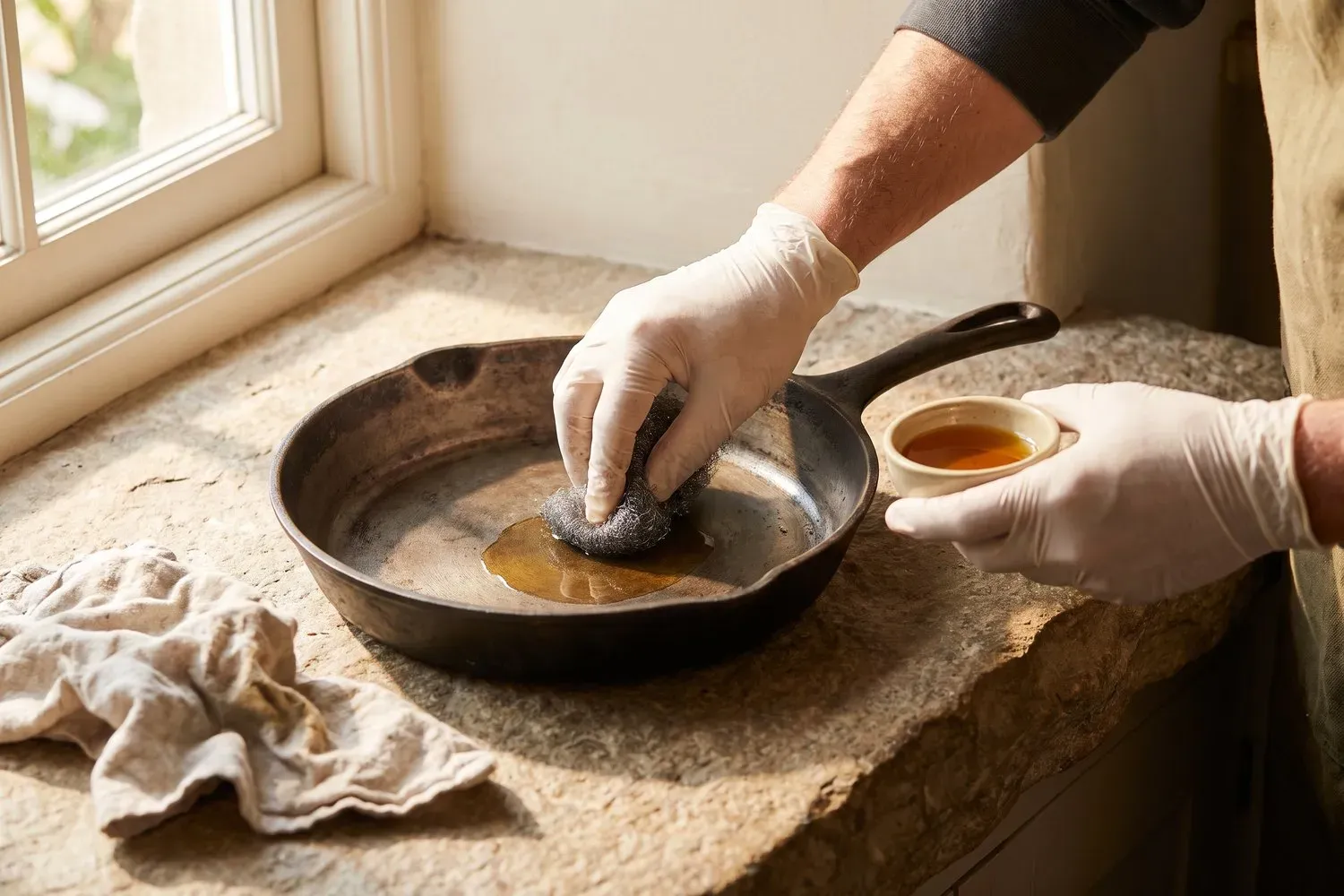
Give the pan a quick wash in warm water with a little washing-up liquid, then dry it at once with a cloth. Put it on a low hob for five minutes so every trace of water evaporates. Water is the one thing that will undo a good seasoning. While the pan is warm, wipe a few drops of rapeseed oil over the surface and buff it dry.
For the first cook, choose something fatty and forgiving: bacon, sausages, onions, roast chicken thighs or a batch of pancakes. Avoid delicate fish, sticky sauces and long-cooked tomato dishes until the surface has darkened a little.
How to heat it
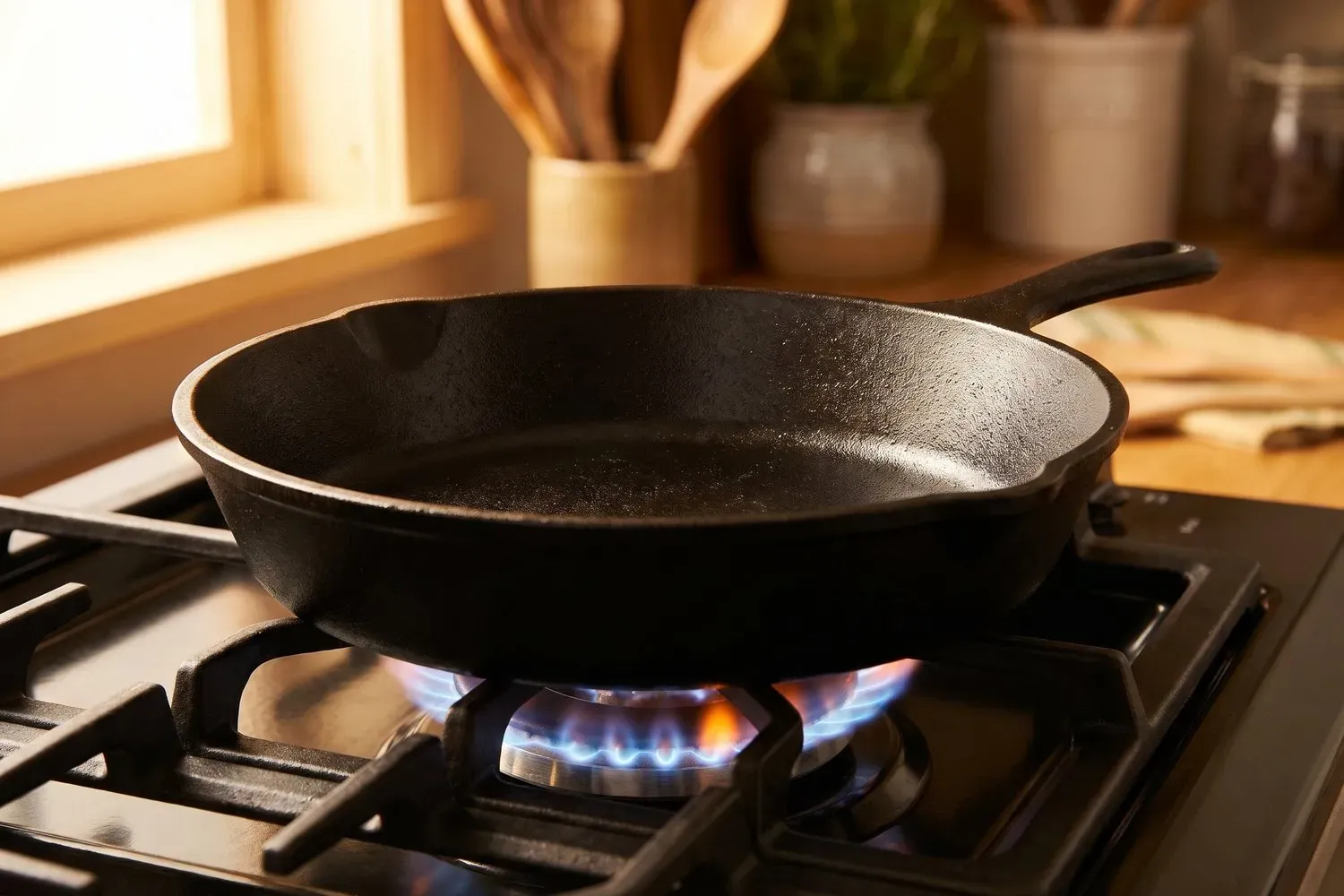
Cast iron is slow to heat and slow to cool. Give the pan five to eight minutes on a medium setting before the food goes in. Do not rush it on full heat. A hot pan with a cold steak will stick, and a pan heated too fast can warp or scorch the seasoning in the middle.
Test the heat with a drop of water. It should skitter across the surface rather than sit and bubble. For most cooking, medium is enough. You will use a lower setting than you would with a thin aluminium pan.
Washing and drying
Wash the pan while it is still warm, not hot. Use warm water, a brush and a little washing-up liquid if needed. Do not leave it to soak and never put it in a dishwasher. Dry it with a cloth, then set it back on a low hob for five minutes. Wipe a thin film of oil over the cooking surface and the outside, then buff off the excess.
If you live in a damp flat or keep pans in a cold cupboard, dry the pan on the hob every time. A pan stored with a lid on while still damp will rust. Leave the lid off until the pan is completely cool and dry.
A week of simple meals
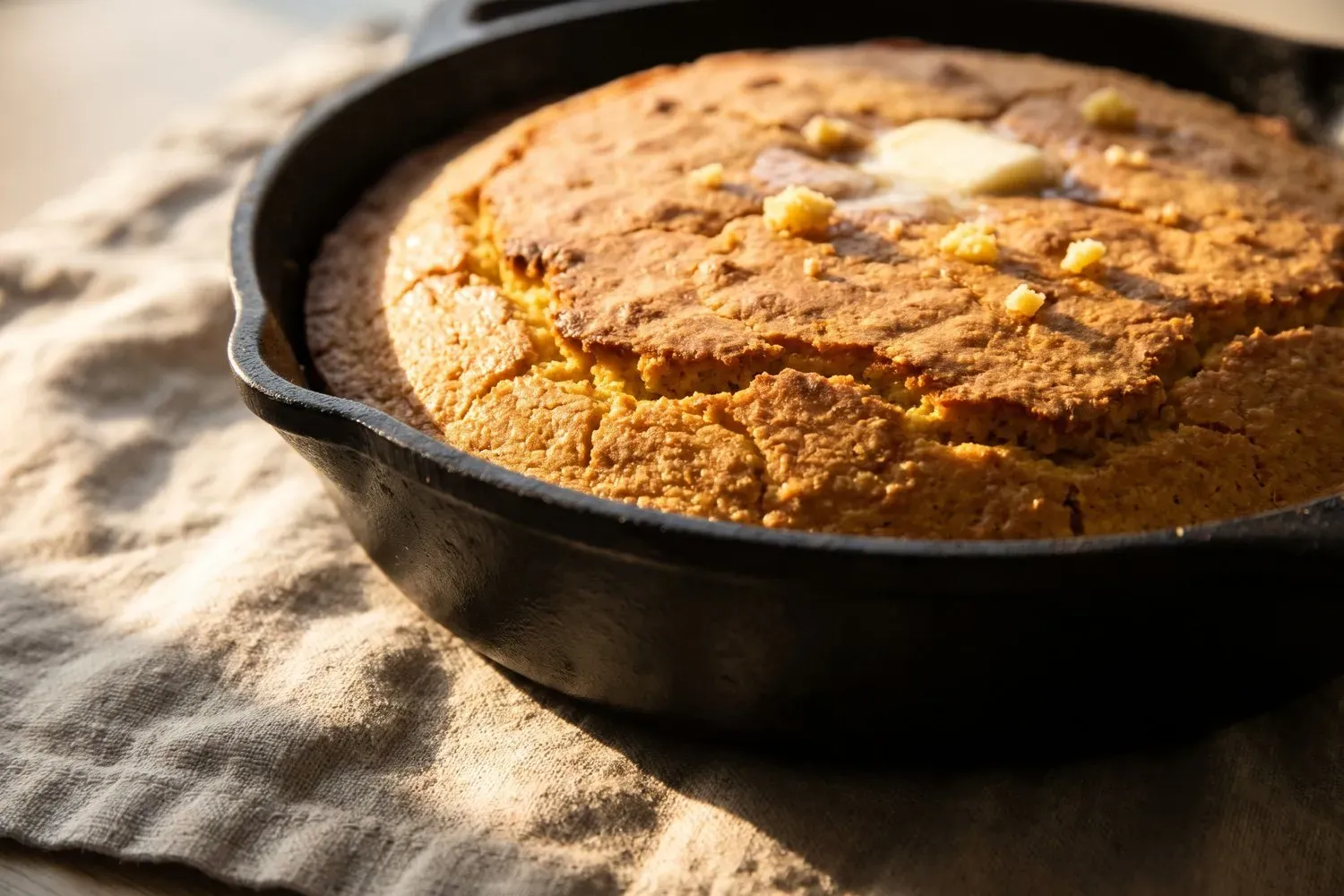
Start with fried eggs and toast, then move on to a chicken thigh traybake finished on the hob. Midweek, try a flatbread or a grilled cheese sandwich pressed under a smaller pan. By the weekend you can sear a steak or bake a cornbread. Each of these adds a little more seasoning.
Expect the pan to look uneven for a while. The centre may be darker than the rim, and the first few washes may leave a grey tinge on the cloth. That is normal. Keep cooking, keep drying it properly, and the surface will settle.
Handle and hob
The whole pan gets hot, including the handle. Use a dry cloth, an oven glove or a leather sleeve. The pan works on gas, electric, ceramic, induction and range cookers, and it is oven safe to 260°C. Enamel pans can discolour in an open flame, so keep those on the hob or in the oven.
At the end of the week, wash and dry the pan once more and put it away without its lid. The seasoning will have begun to even out, and the pan will feel less new. From here, the care is simple: cook often, dry it well and give it a little oil.