Rust on a cast-iron pan looks worse than it is. Iron rusts when it is left wet, and a pan that has been soaked, put away damp or kept in a cold shed will show orange patches. In most cases the rust sits on the surface and comes off with steel wool and a little work. The pan underneath is usually sound.
First, find the cause
Look at how the pan has been stored. A dishwasher, a long soak in the sink or a lid put on while the pan is still damp will all cause rust. So will a humid cupboard or a stack of pans with no protection between them. Fix the cause before you repair the pan, or the rust will come back.
Light surface rust
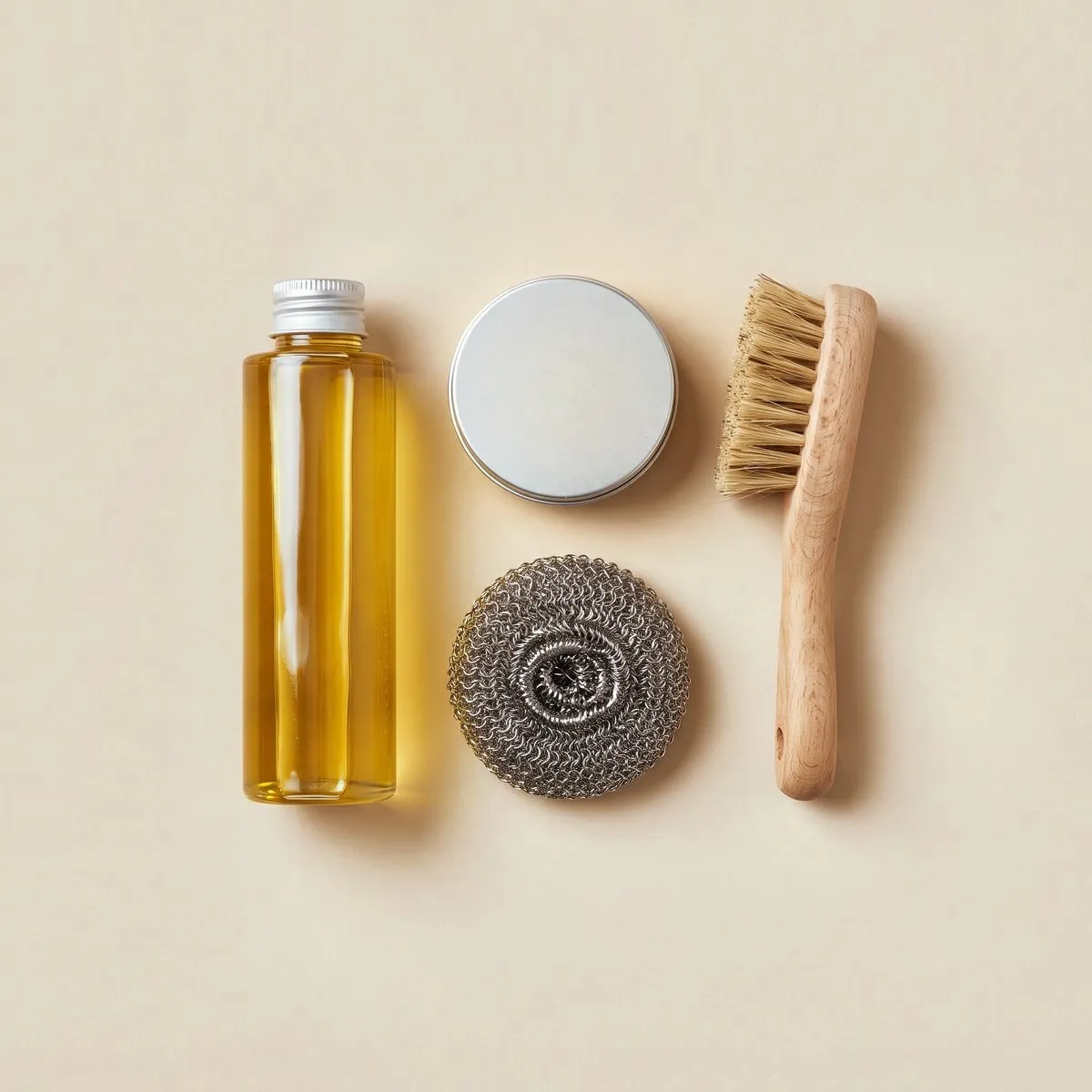
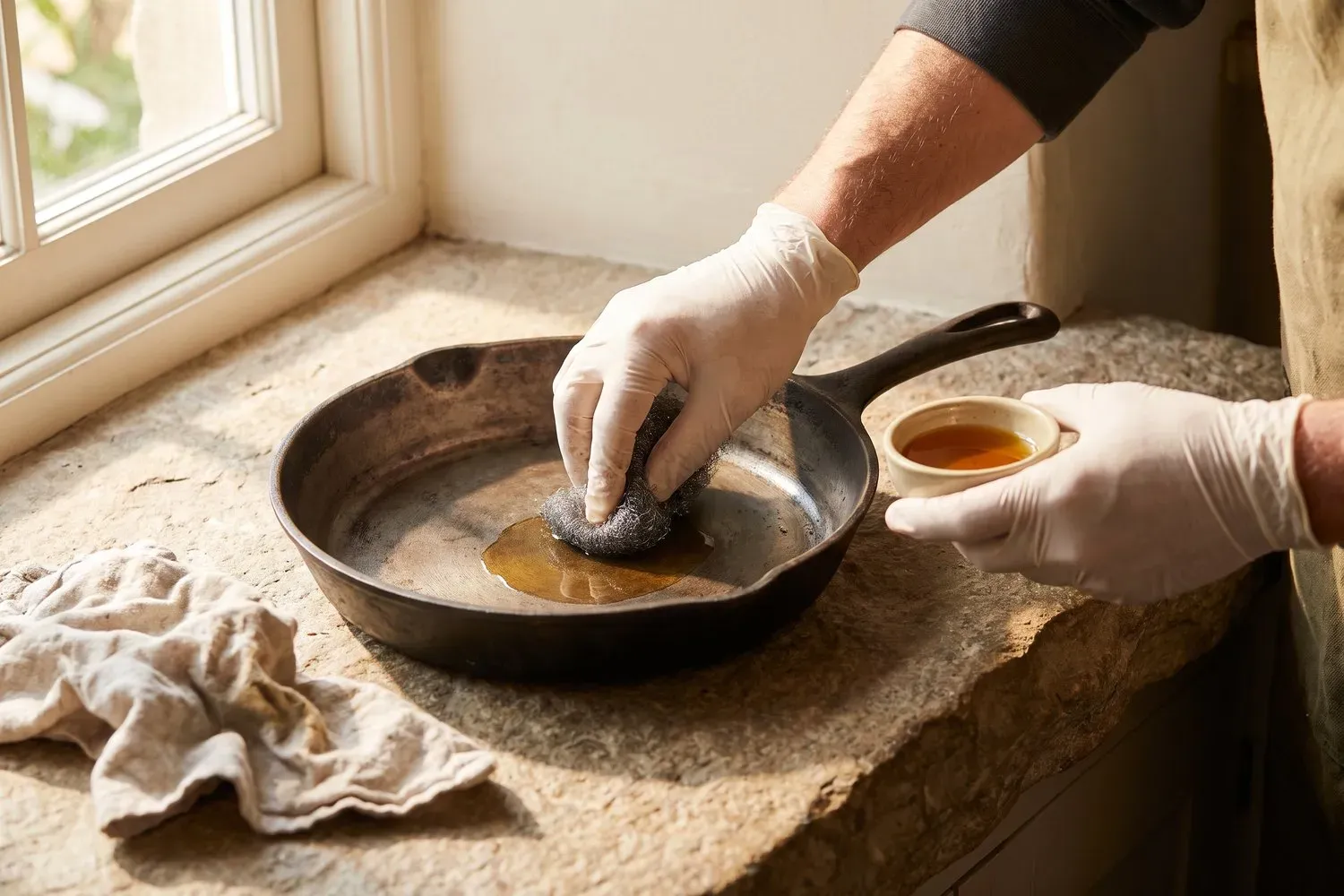
For a few orange spots, use fine steel wool with warm water and a little washing-up liquid. Scrub the patches in small circles until the orange is gone and you can see dark iron underneath. Rinse the pan and dry it immediately with a cloth. Put it on a low hob for five minutes to make sure every trace of water has gone.
While the pan is warm, wipe 5 ml, about a teaspoon, of rapeseed oil over the cooking surface and buff it dry. Heat the pan on medium for ten minutes, let it cool and repeat once or twice. The seasoning will build back over the bare patches.
Heavier rust
If the rust has been there a while, you may need to soak the pan briefly in a mix of equal parts white vinegar and water. Keep it to 30 minutes at most. Vinegar strips seasoning as well as rust, so do not leave the pan in longer than needed. Scrub with steel wool, rinse well and dry it at once on the hob. Then season it two or three times before you cook.
Pitting, where the rust has eaten small craters into the iron, cannot be filled. A pitted pan is still usable. The pits will fill with seasoning over time, and food will not notice them. Deep cracks are different, so stop using a pan that is cracked through.
After the repair
Cook something fatty for the first meal back: bacon, sausages or fried bread. Avoid tomato sauce and vinegar for a week or two. Wash the pan with warm water, dry it on the hob every time and add a thin coat of oil before it goes away.
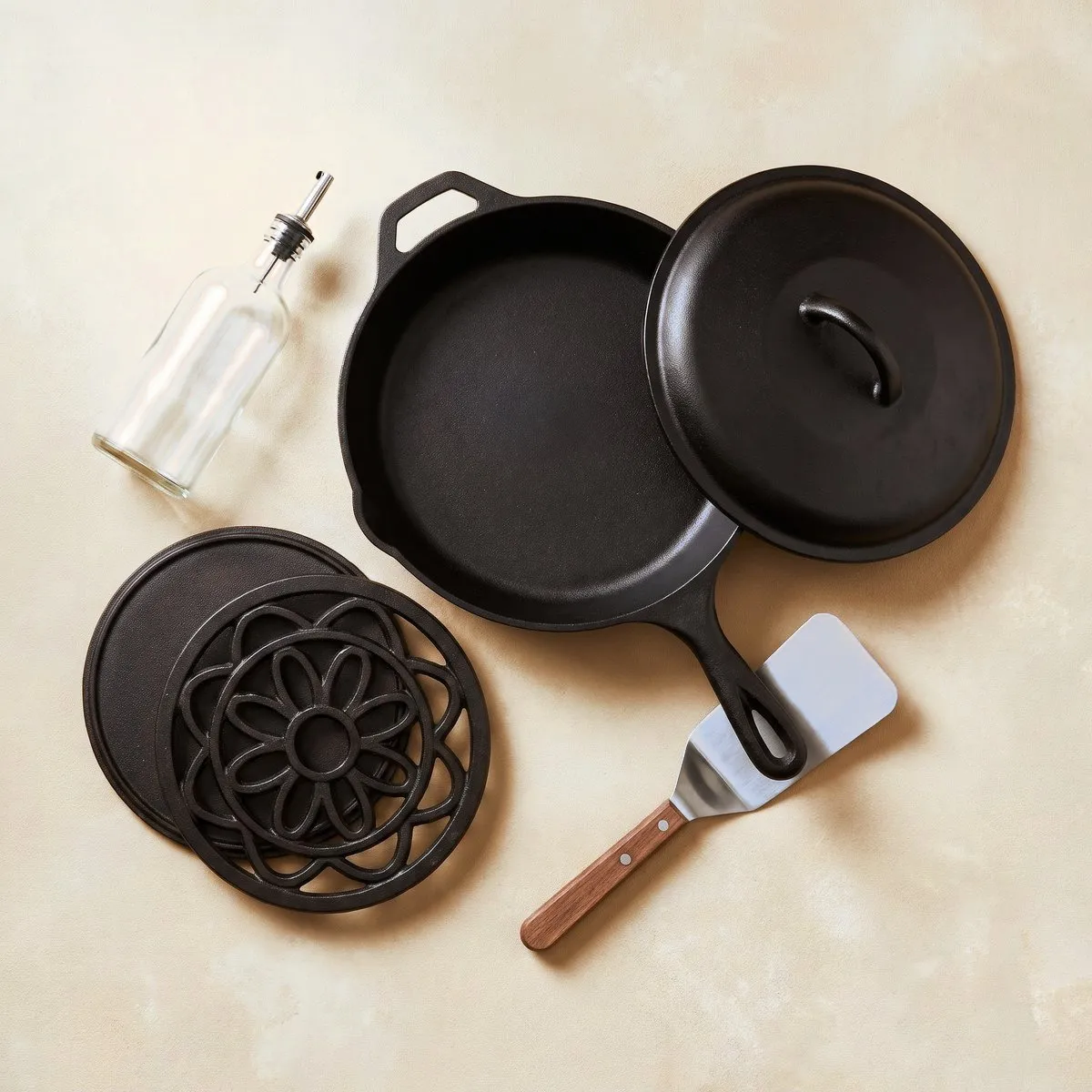
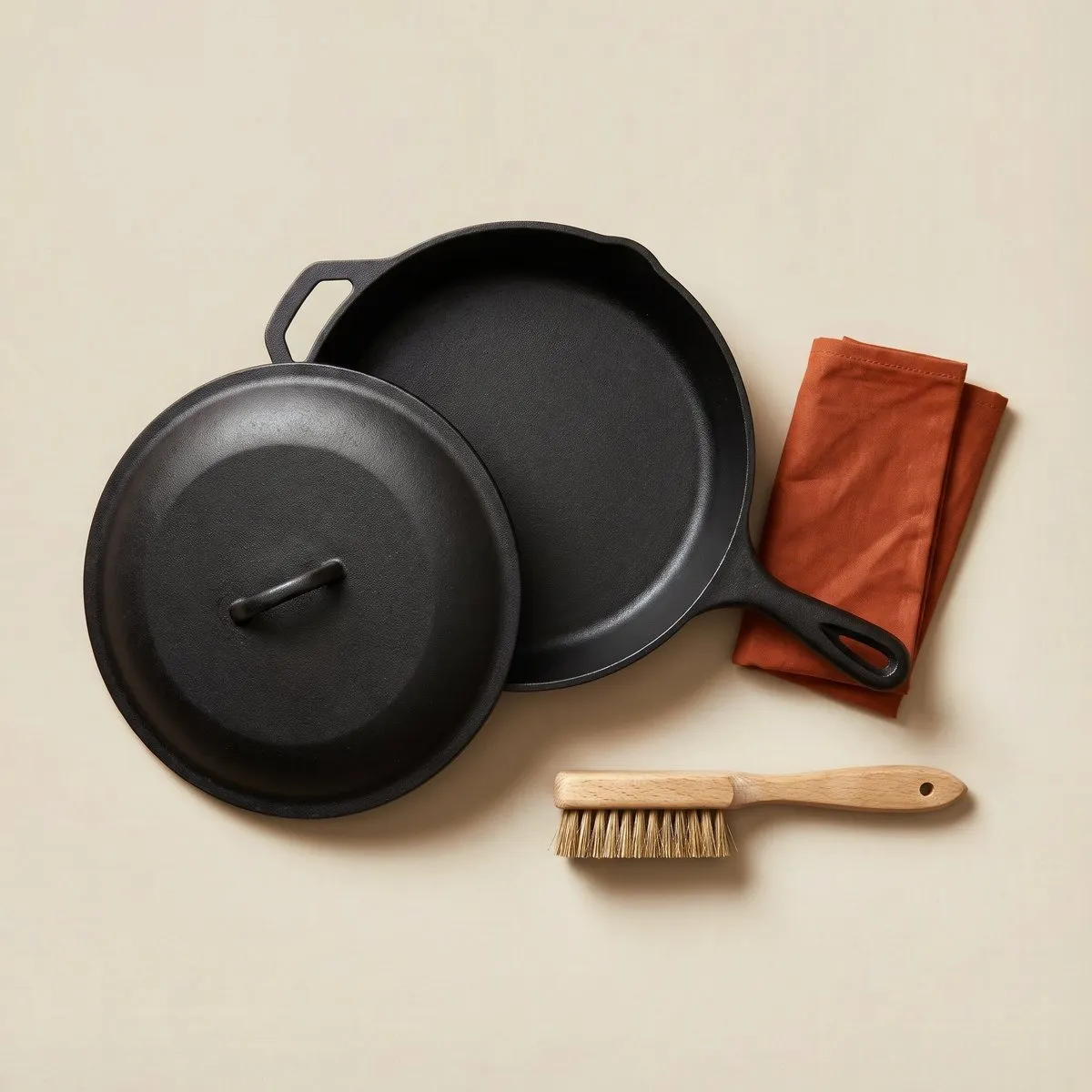
Store the pan with the lid off, or with a folded cloth between the pan and the lid. If you stack pans, put a felt protector or a piece of kitchen paper between them. A dry pan in a dry cupboard will not rust.
Keep it dry
The rules are simple. Never leave the pan to soak. Never put it in a dishwasher. Dry it on the hob, not just with a cloth, and give it a little oil while it is warm. A pan that is used often and dried properly will stay dark and even for years.