A good steak in a cast-iron pan needs three things: a dry surface, a hot pan and a little patience while it rests. This method is for two steaks about 300 g each and 2 cm thick. Thicker steaks need a little longer, and a very thin steak is better cooked quickly and served at once.
Before you cook
Take the steaks out of the fridge 30 minutes before cooking. Pat them completely dry with kitchen paper. Wet meat steams rather than sears. Season both sides with about 5 g of fine salt, or a good pinch each, and leave them on a plate while the pan heats.
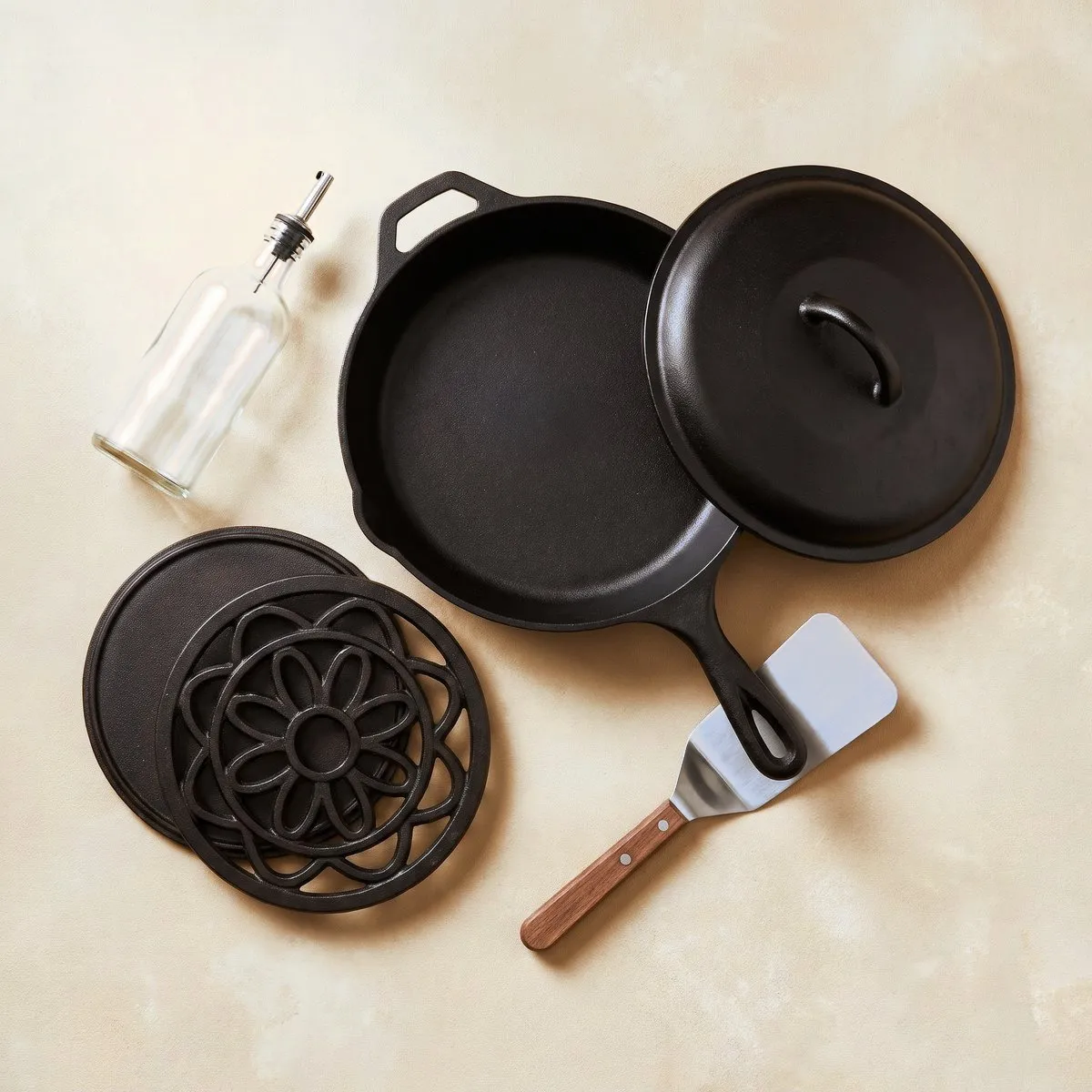
Heat a 26 cm pan on a medium setting for six to eight minutes. You want the surface hot enough that a drop of water skitters, but not so hot that the oil burns the moment it touches the pan. Add 15 ml, one tablespoon, of rapeseed oil and swirl it around.
Searing
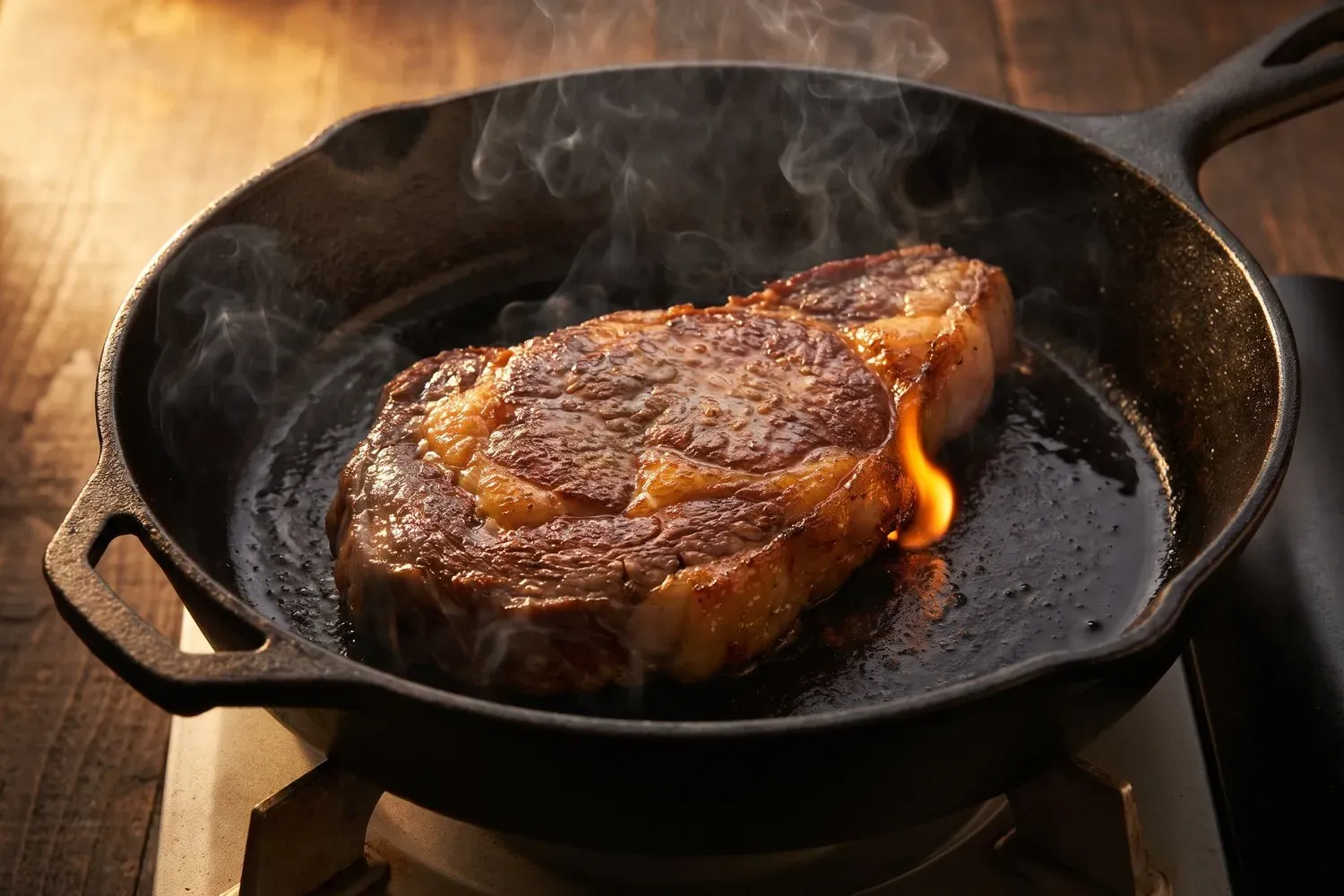
Lay the steaks in the pan away from you so any fat does not splash your hand. Leave them for two minutes without moving them. Turn and cook for two minutes on the other side. Then turn every minute for another two to four minutes, depending on how you like them. A medium-rare steak reads about 55°C in the centre on a probe thermometer, and it will rise a few degrees as it rests.
In the last minute, add 20 g of butter, two crushed garlic cloves and a few sprigs of thyme. Tilt the pan and spoon the foaming butter over the steaks. Do not let the butter burn. If it starts to darken too quickly, lift the pan off the heat for a moment.
Resting
Move the steaks to a warm plate and pour over the pan juices. Cover loosely with foil and rest for five to ten minutes. Resting lets the juices settle back into the meat, so they end up on the plate rather than running out when you cut.
Cut across the grain into slices about 1 cm thick. If you want a pan sauce, pour off most of the fat, add 100 ml of stock or water and scrape the dark bits from the base. Simmer for a minute, then stir in a small knob of butter.
After cooking
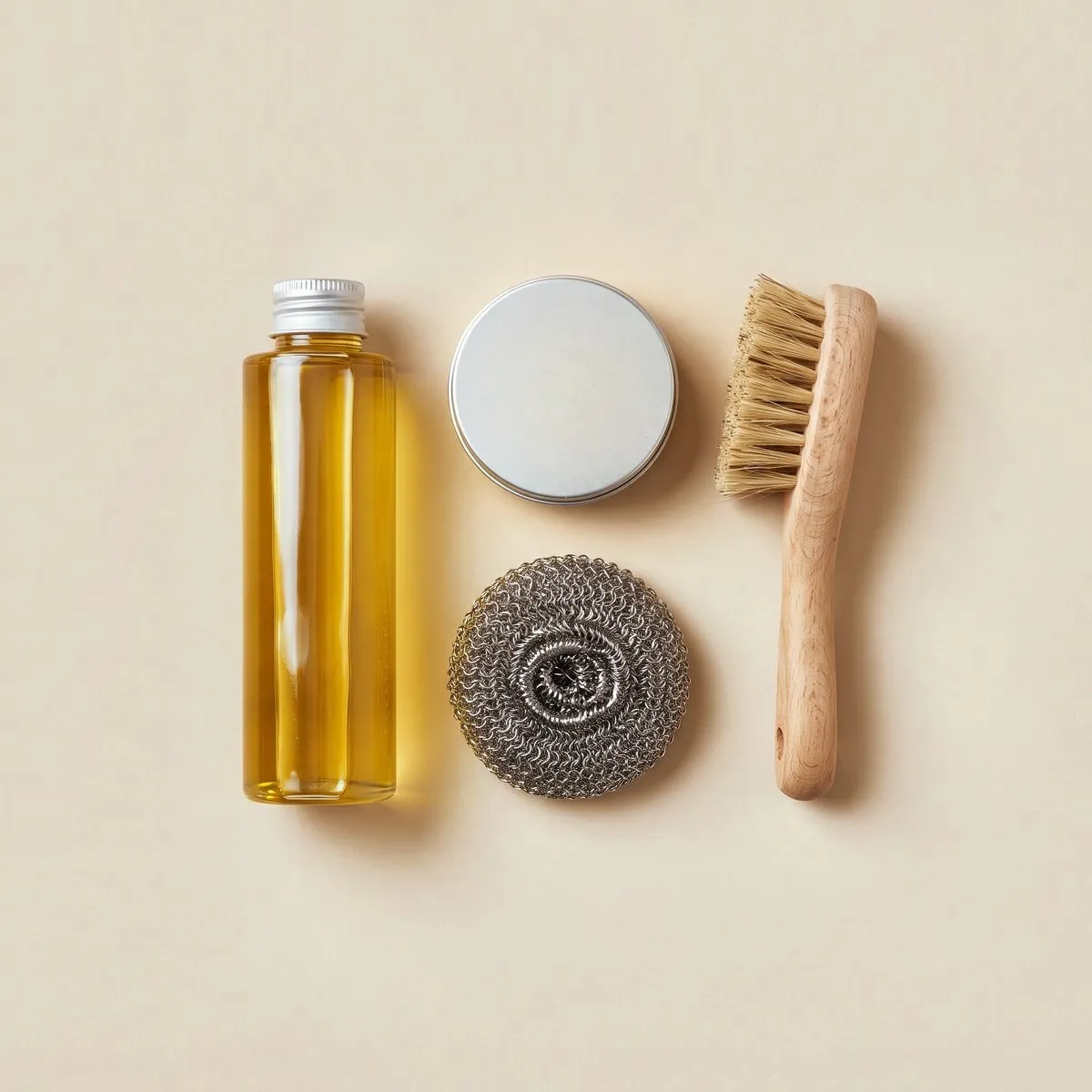
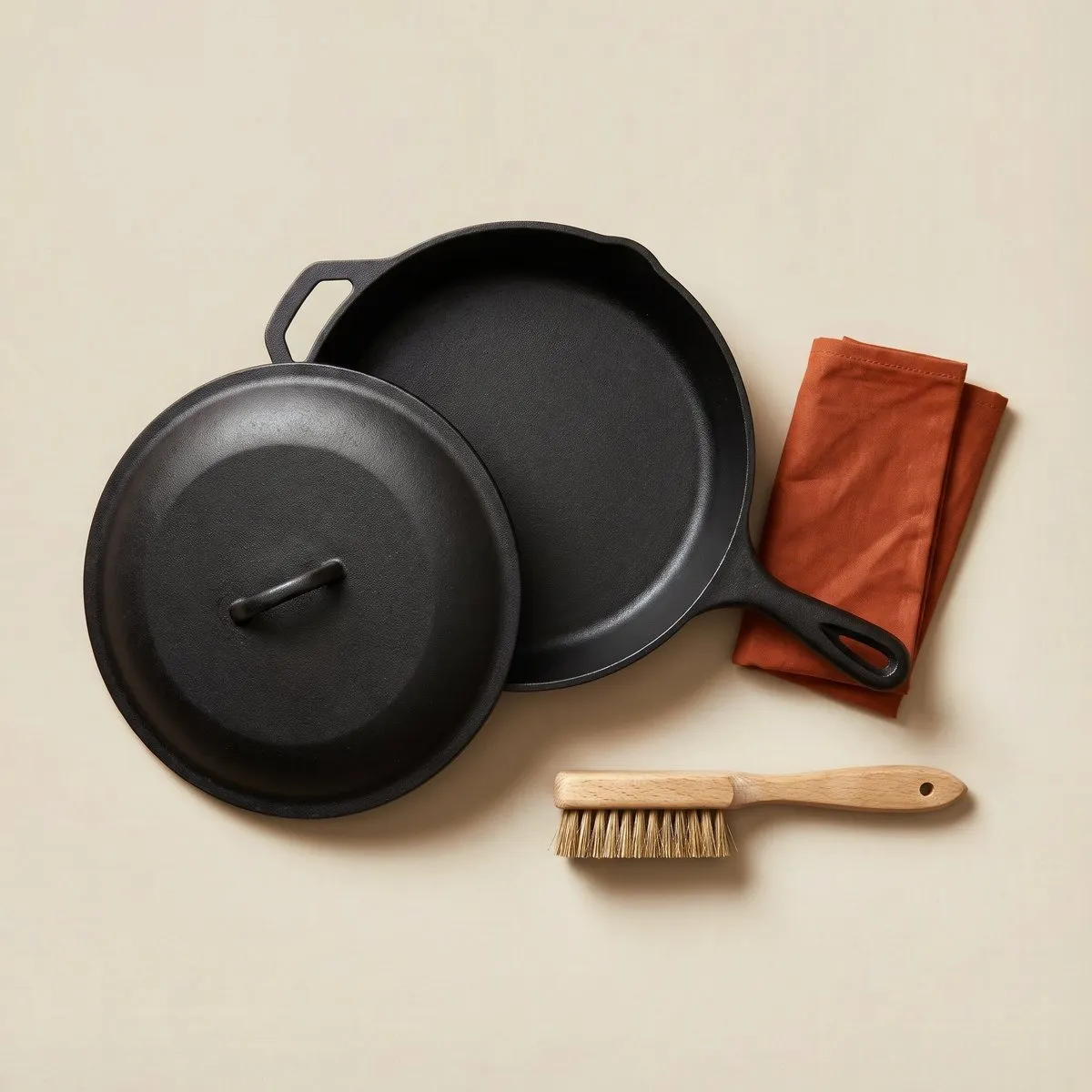
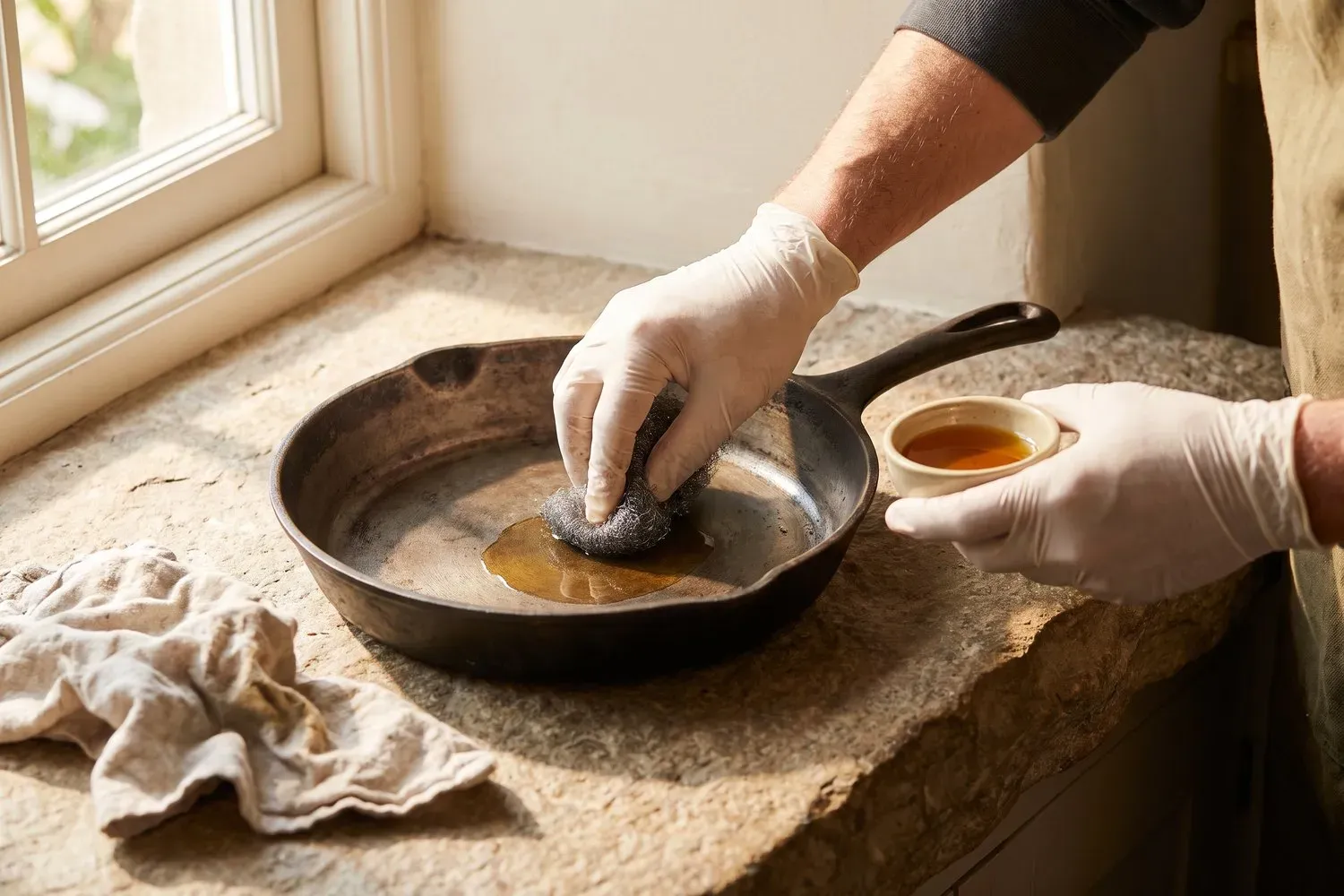
Let the pan cool a little before washing. Add warm water while it is still warm, not cold water into a hot pan, and loosen anything stuck with a brush. Dry it on the hob for five minutes and wipe over a few drops of rapeseed oil.
Expect some smoke. Steak at this heat will always smoke a little, so open a window or turn on the extractor before you start. The reward is a dark crust and a juicy middle, and the pan will be better for it next time.
Cook one or two steaks at a time. Crowding the pan drops the heat and the steaks will stew. If you are cooking for four, sear two, rest them while you cook the next two, then warm all four briefly in the oven at 120°C.