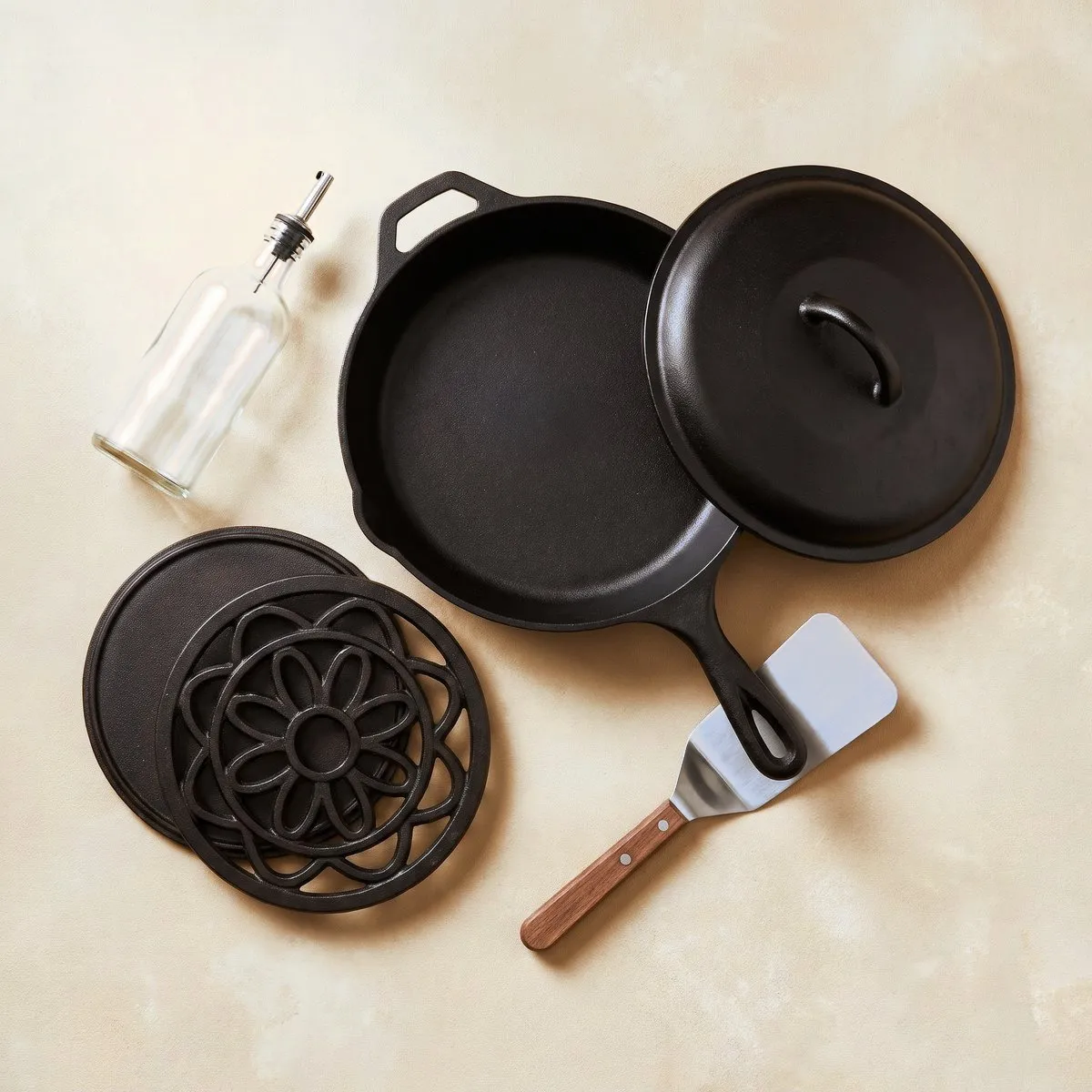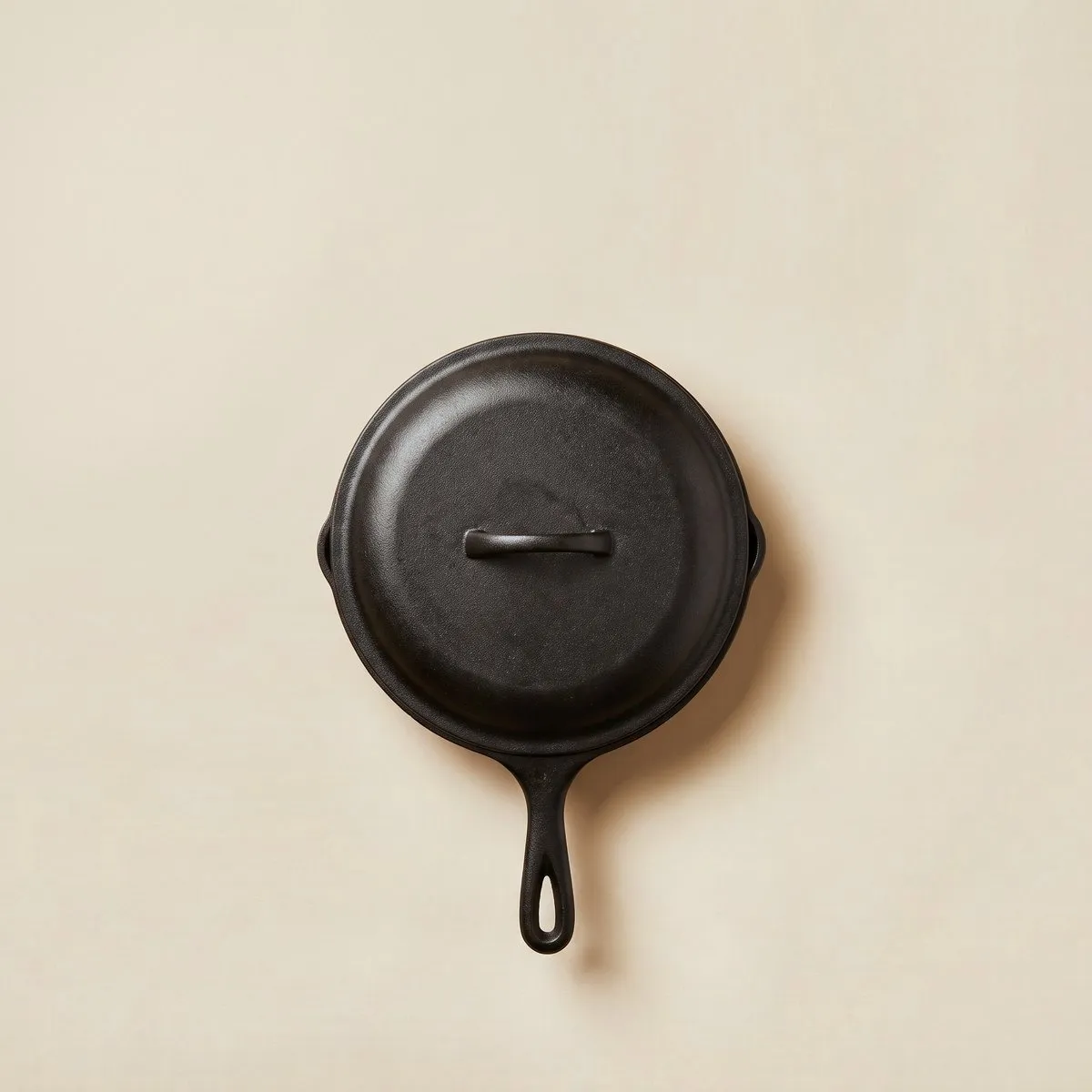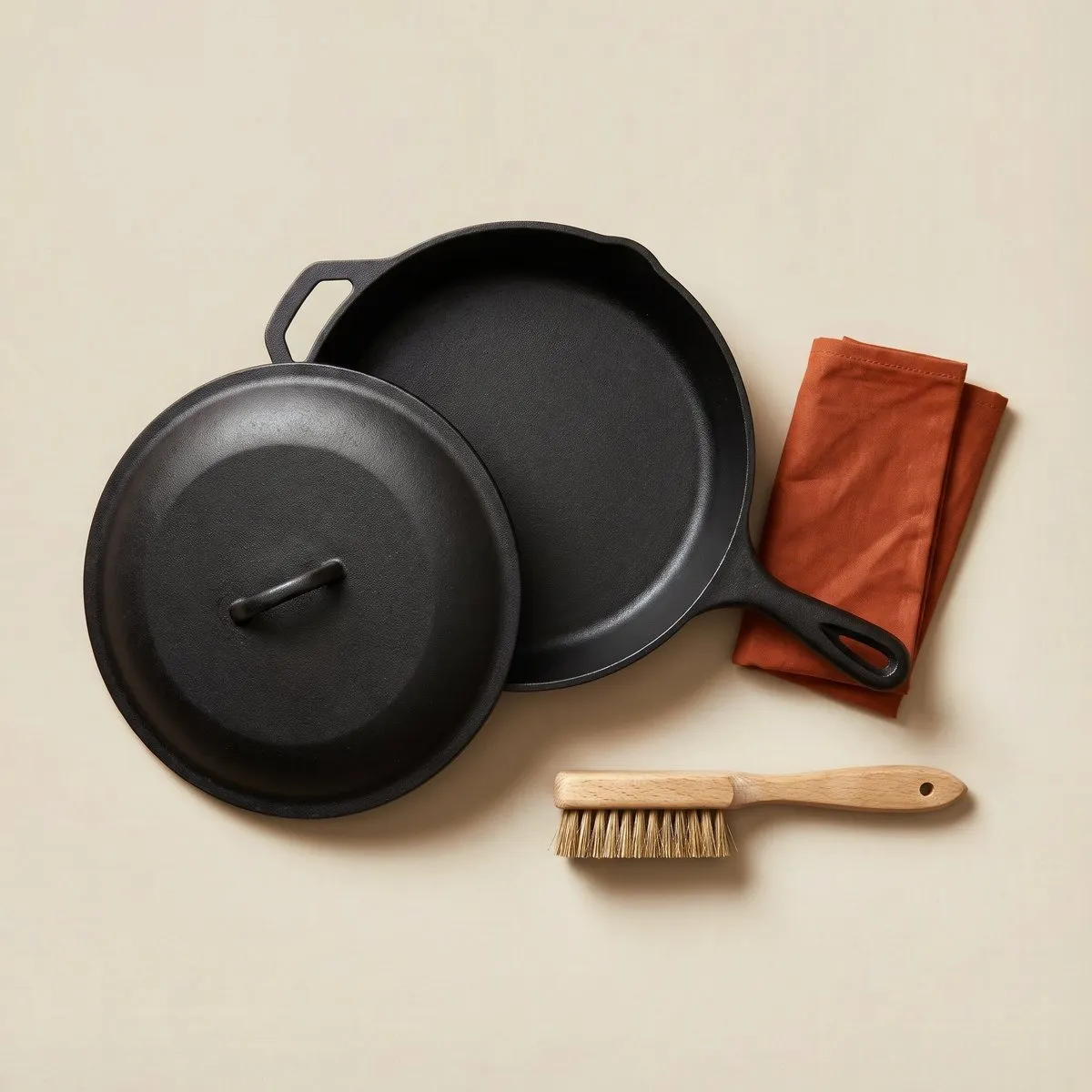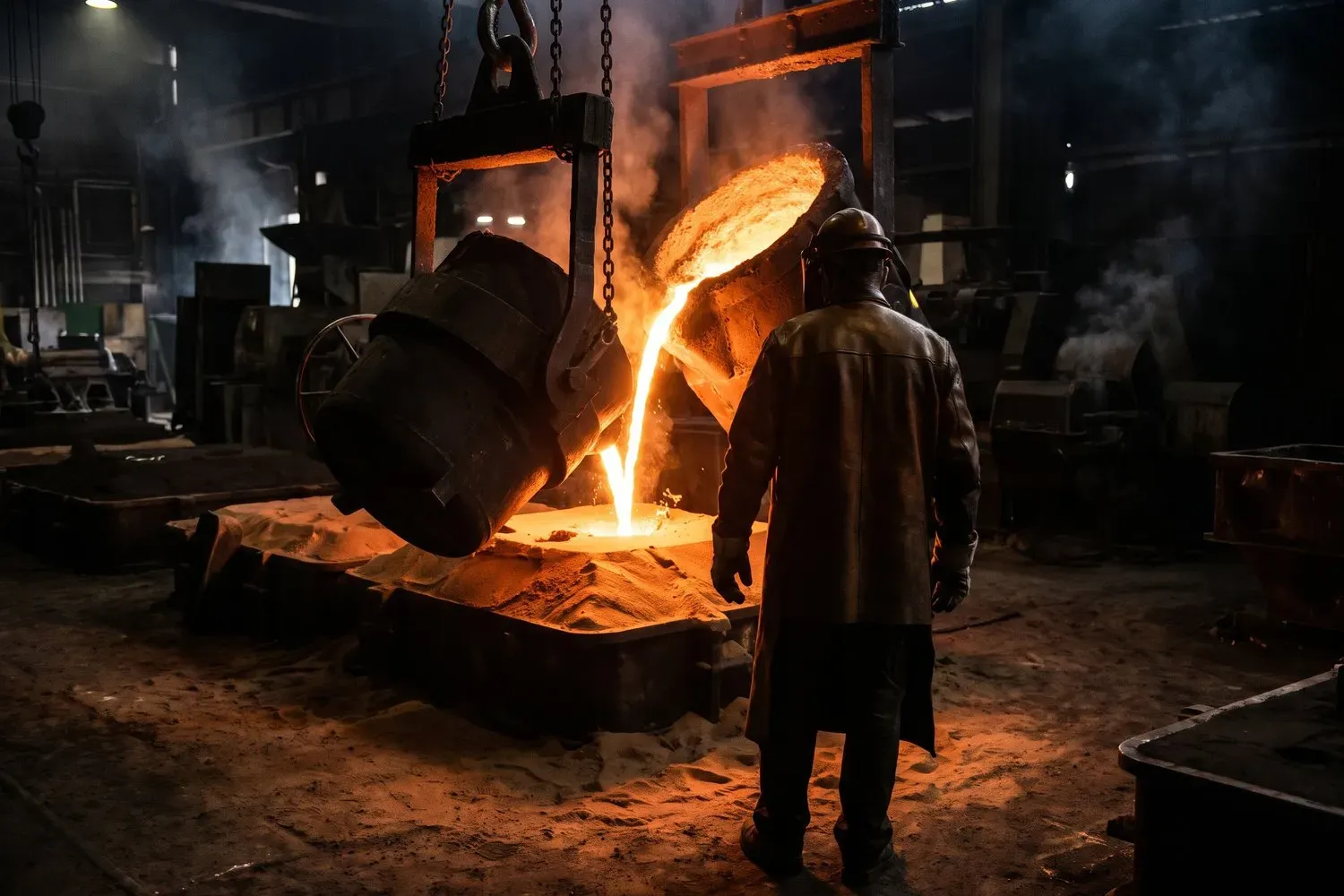
A Halden pan arrives already seasoned. It has had three coats of rapeseed oil, baked on at the foundry, so you can cook in it on the first day. Seasoning is not a permanent finish, though. It is a thin layer of oil that has bonded to the iron, and it builds, wears and repairs itself as you cook.
What seasoning is
When oil is heated past its smoke point in a thin layer, it sets into a hard, smooth surface that sits in the pores of the iron. That is what gives a well-used pan its dark, glossy look. It is not a coating like enamel. It cannot chip off in sheets, but it can wear thin in the middle if you scrub hard or cook a lot of acidic food.
A new pan will look patchy at first. That is normal. The dark and light areas even out with use, and a pan that is cooked in often needs very little attention.
When to top it up
You do not need to season a pan after every meal. Look for a dull grey patch, a spot where eggs or fish begin to catch, or a surface that has gone matte after washing. Those are signs that the layer has thinned. Tomato, wine, vinegar and lemon juice all strip seasoning faster than other foods, so give the pan a light coat after a sharp, saucy dinner.
The stovetop method
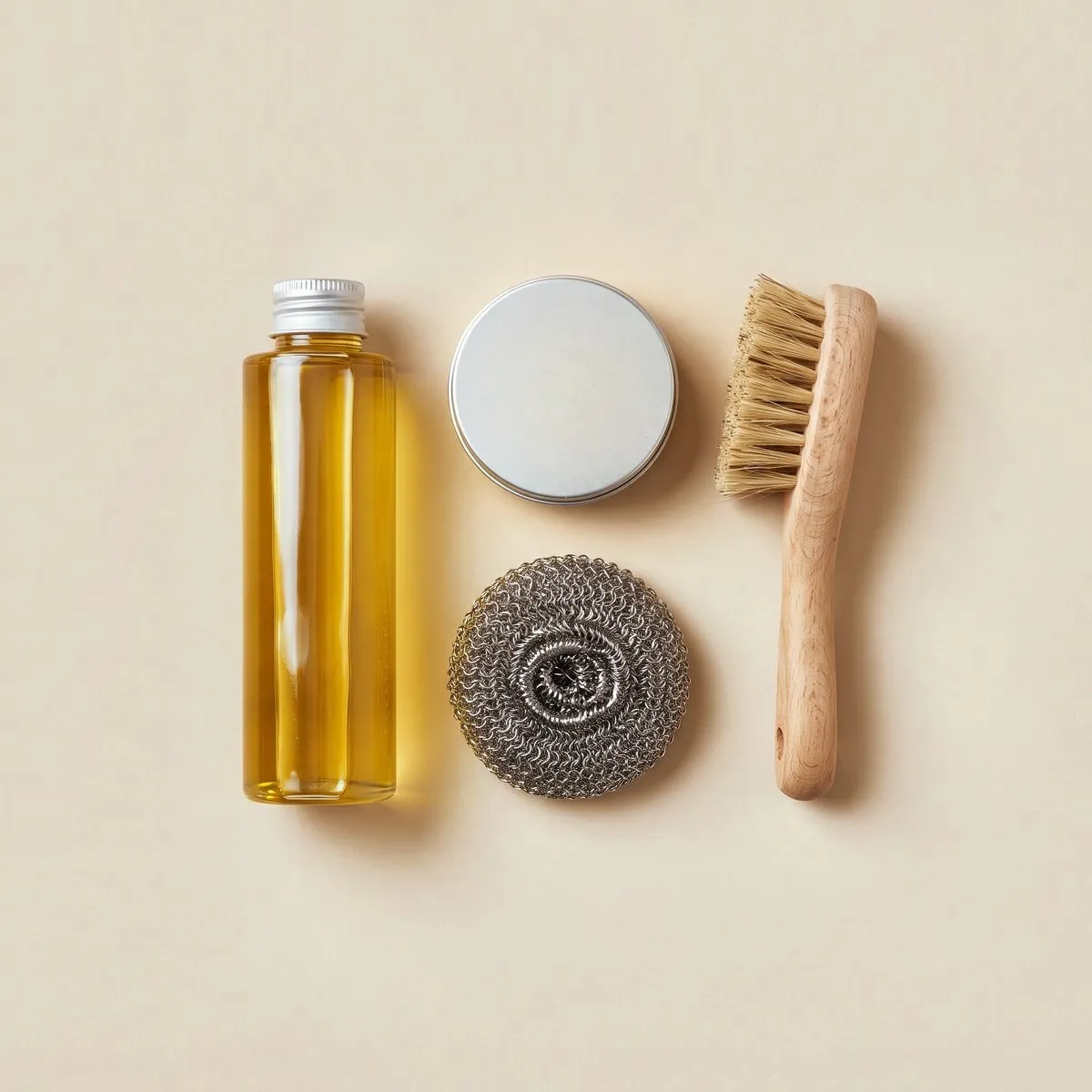
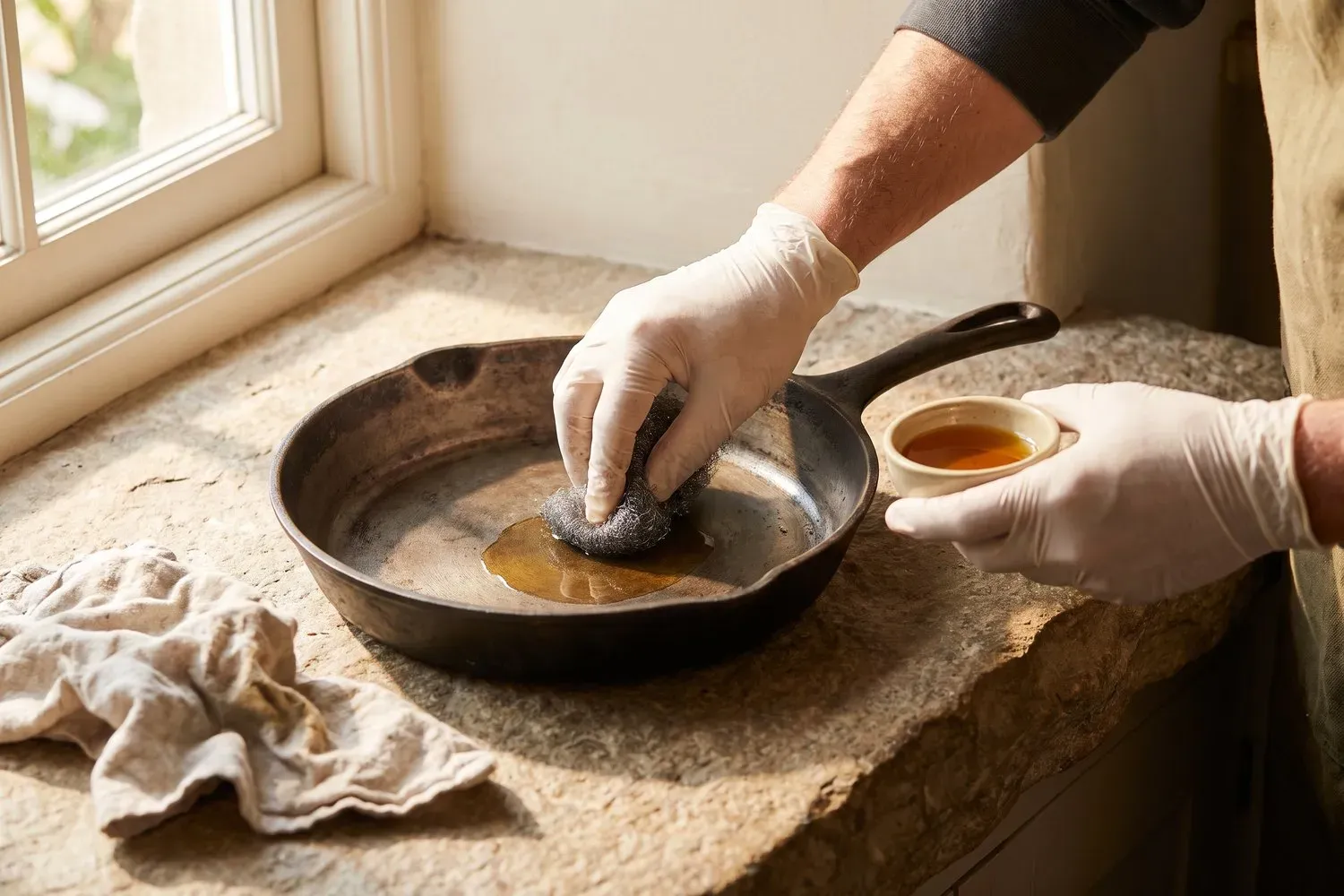
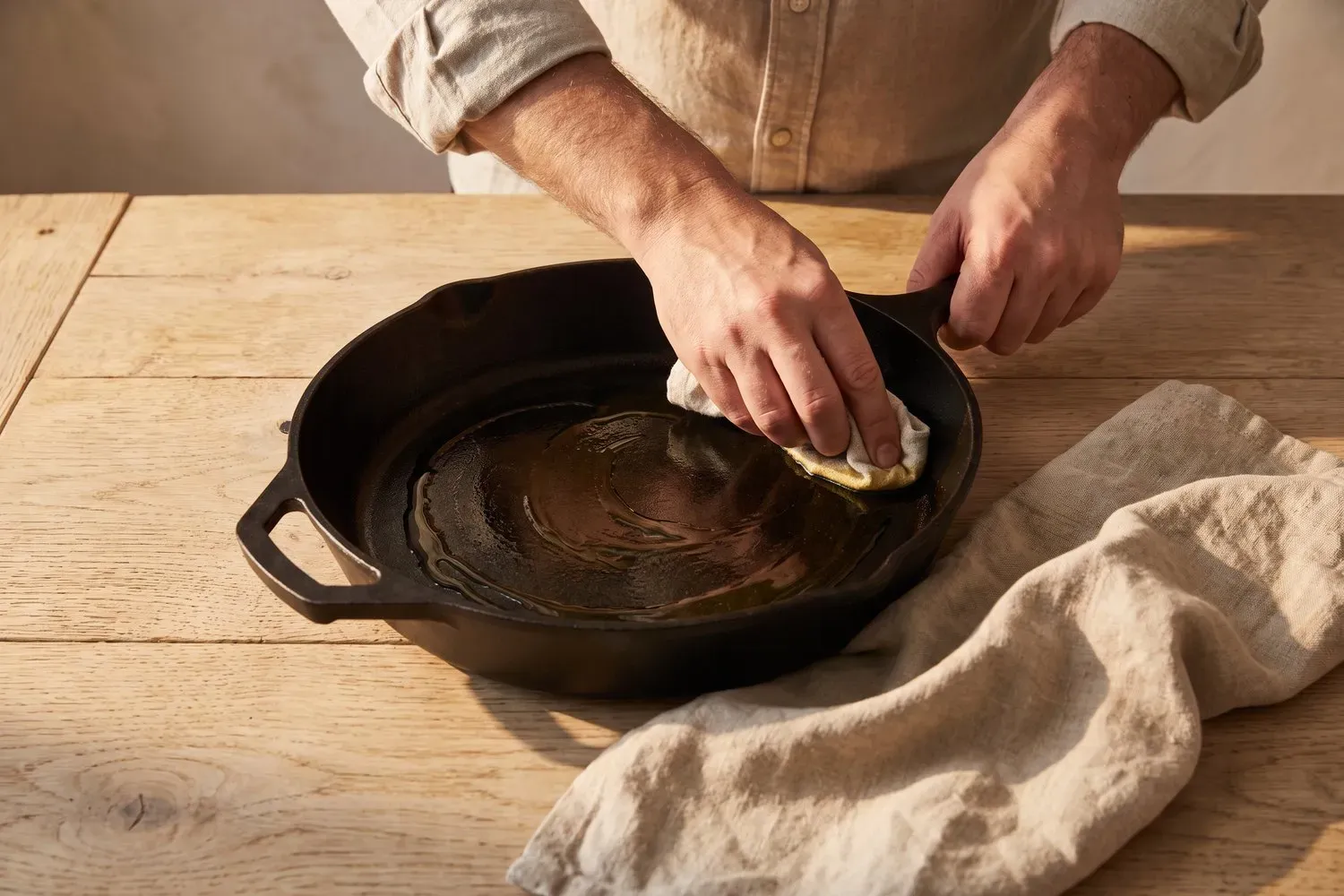
Wash the pan in warm water with a little washing-up liquid and a brush, then dry it thoroughly with a cloth. Put it on a low hob for five minutes to drive off any remaining moisture. Add about a teaspoon, 5 ml, of rapeseed oil and wipe it over the whole cooking surface with a folded cloth or kitchen paper. Then buff it back as if you are trying to remove it. A thin, even film is what you want. A thick film turns tacky.
Turn the heat to medium and leave the pan for ten minutes, until it just begins to smoke. Take it off the heat and let it cool. Repeat two or three times if the surface still looks dry. The oven works too: heat the pan upside down at 240°C for an hour with a tray underneath to catch any drips.
What not to do
Do not use butter, olive oil or a low smoke point fat for seasoning. They burn before they bond and leave a sticky residue. Do not season a wet pan, because the water traps under the oil and lifts it. Do not pour on a puddle of oil and hope for the best. More oil is not better.
Remember that the pan is heavy. A 26 cm pan weighs 2.4 kg, so lift it with two hands when it is full or hot, and keep a cloth or sleeve over the handle.
Keeping it going
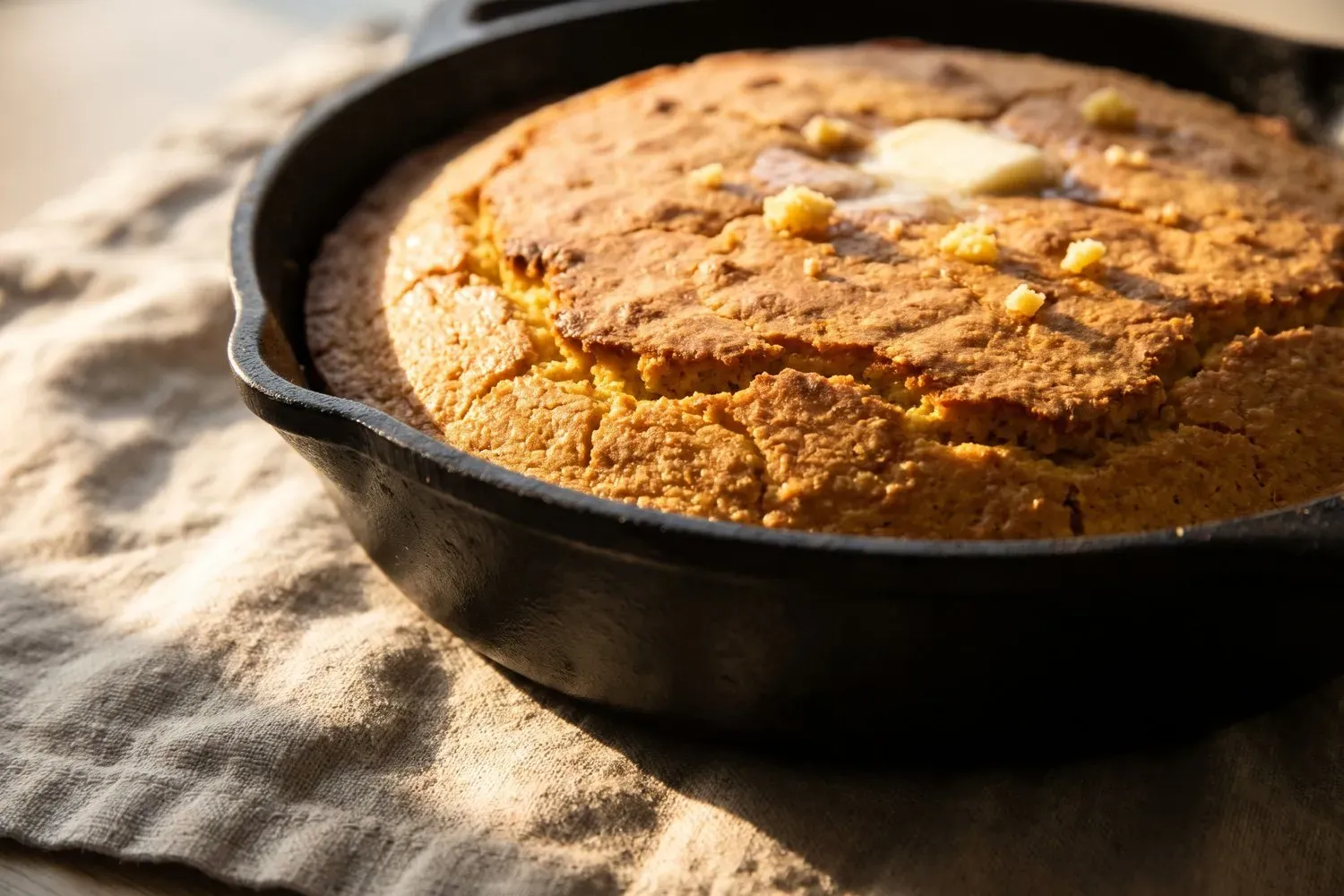
The best seasoning comes from cooking. Fry bacon, roast chicken thighs, make pancakes or shallow-fry potatoes. Wipe the pan clean rather than scouring it, dry it on the hob for a few minutes, and add a drop of oil before you put it away. Do that and the surface will keep improving for years. A pan that is used gently and dried properly will look better at five years old than it did on the first day.